



Arizona Ice Art Quarterly Newsletter | October 2025
May 21, 2025 Arizona Ice Art All About You Customer Spotlight Ryne’s Love Affair with Artisanal Ice By Sam Agrawal, Managing Director/Owner, Arizona Ice Art
I had a chance to talk with one of our long-time customers, Margarita Goddard, who shared how she got turned on to ice sculptures. When Margarita’s goddaughter Lorena turned 15, Margarita wanted to do something really special for her quinceañera. “As her godmother, I felt a real obligation and opportunity to do something extraordinary for this special event”, said Margarita, as she told me about her introduction to ice sculptures. Although Margarita wasn’t very familiar with ice sculptures, she remembered seeing one at a resort buffet table with shrimp around it. Margarita knew that ice sculptures were used to enhance corporate events and weddings. “But why not for a family event?”, she thought. Not really knowing much about ice carvings, she wondered if the local ice sculpture company in Tucson, AZ could carve a large star out of ice for her.
“Lorena was like a star for us. She is such a loving and caring person”, Margarita recalled about her goddaughter, “and an ice sculpture of a star would be totally befitting for the occasion”. With that, Margarita ordered her first, of many ice sculptures.
“I was an amateur and didn’t really know what to do with it”, Margarita mused. They decided to place it at the buffet table as an eye-catcher. As she recalls, everyone was hovering around the ice sculpture. It turned out to be an unquestionable hit! The kids at the event loved it!! They were touching the ice, licking it, reaching for it, and just prized it, and everyone wanted a picture with it. They couldn’t get over the fact that it was just a big block of ice, but that it was so transparent and pretty!
That was in 2010. A few years later, her goddaughter’s sister, Judith, was going to celebrate a quinceañera also. Margarita’s first experience was so favorable, that she decided another ice sculpture was the only way to go—with a winter wonderland theme. Well, this quinceañera turned out to be really special. Margarita ordered a very large ice snowflake. And then, since the birthday girl was really into music and played the electric guitar, Margarita also ordered an ice sculpture of an electric guitar! Yeah, that girl got two ice sculptures!! “We had a large table with sweets and candies”, Margarita recalled, “and we placed the snowflake sculpture right in the center of the sweets table. When people got their hands sticky from handling the sweets, they would wipe their fingers on the snowflake!”
In 2019, Margarita’s niece Jillian got married to a man who was in the navy. Margarita wanted to be a good aunty, and was so inspired by the incredible ice sculptures she had previously ordered, that she decided they must have one at their wedding. Margarita gifted them an amazing ice sculpture of an anchor.
In all, Margarita has ordered 8 ice sculptures from Arizona Ice Art over the years. However, she has now picked up the pace. Barely six months apart, she has already ordered two extra-large 2-block sculptures. One of these was gifted to her daughter Danika by Margarita’s sisters, and the other was a gift from Margarita for her youngest daughter, Jazlynn, on the occasion of her quinceañera.
“When you want to make someone feel extra special, this is the way to do it”, Margarita said with conviction. “Sculptures are expensive, but when someone means so much to you—and is so close to your heart—then this is the way to show them how much you love them.”
Wow, Margarita definitely knows how to throw a party with ice sculptures. I’m sure her hundreds of guests over the years will acknowledge that ice sculptures not only add elegance and class to every event, but can be a lot of fun for all ages to enjoy. And as Margarita concluded our conversation, she said, “Even breaking down the ice after the party is so much fun. It is exciting to smash the ice into pieces and everyone wants to help. Some of the kids even wanted to take large chunks of the ice home with them!!”
We’d love to share it through our newsletter or website! Let us know how you got introduced to ice sculptures or about your favorite ice sculpture event. Maximum 4 paragraphs long.
Send your story to contact@aziceart.com
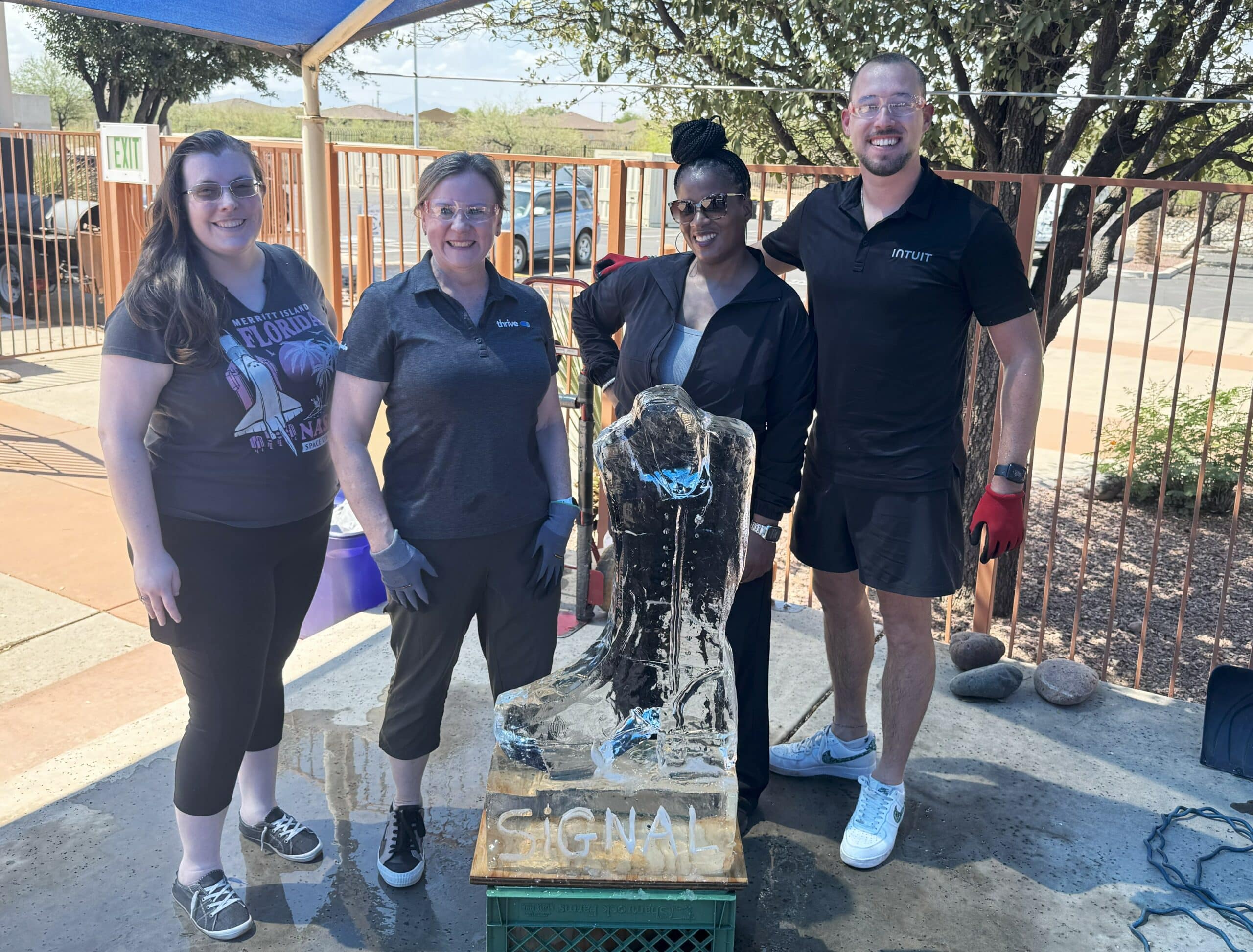
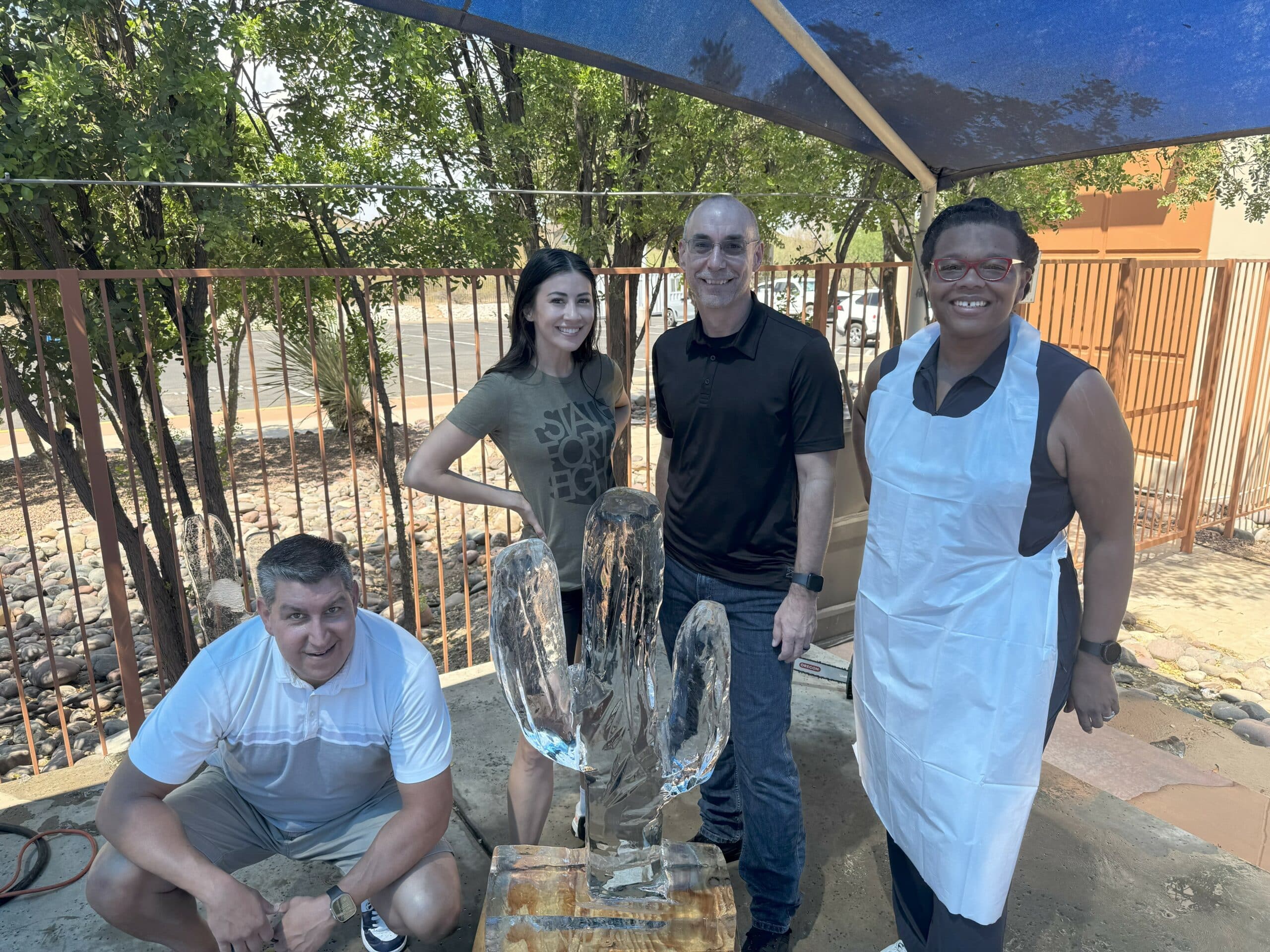
Arizona Ice Art recently conducted a Team Building activity with out-of-town visitors. Our customer was a company who had employee-visitors from outside Arizona. Although they had worked together previously, a fun team building activity made their visit much more interactive and memorable. Grouped into teams of 4, they enjoyed hands-on ice carving with manual and power tools (yes…a chainsaw also!). Each group started with a 40” tall block of clear ice. Under the watchful eye and tutelage of Arizona Ice Art team leaders, both teams enjoyed cutting, chiseling, grinding and shaving the ice to give it just the right shape. At the end, one team had created a saguaro cactus while the other carved a cowboy boot. What great Arizona choices for our guests! And we were impressed to see how nice the final sculptures turned out even though the teams that had never carved ice before.
Ask about the different types of team building activities to suit the size of your group. Send your inquiry to contact@aziceart.com
The history of ice sculpting dates back centuries, originating in regions that had cold climates. Ice sculptures are fleeting, lasting anywhere from hours to a few months depending on temperature and environment. Although they are now used for all types of formal and informal events, they were historically associated with special or extravagant events due to their limited lifetime.
Ancient Origins and Early Use (600 B.C. – 17th Century China)
The earliest known record of ice harvesting is found in the Shih cheng or “Book of Songs,” written around 600 B.C., which describes warrior-farmers in northwest China flooding fields, cutting ice blocks, and storing them in icehouses to keep fish fresh in warmer months.
In the 1600s, native hunters and fishermen in the Chinese province of Heilongjiang, bordering Russia, designed ice lanterns for dark winter nights. They would fill buckets with water to make ice, then remove the ice and place a candle in the hole to create a lantern. This trend spread, leading to decorated lanterns being hung from homes and paraded in carnivals.
The Harbin International Ice and Snow Sculpture Festival (Late 19th Century – Present)
The extension of the Trans-Siberian Railway through Harbin, Heilongjiang, in 1897 contributed to the town’s growth into a cosmopolitan city. With cold Siberian winds and ice from the Songhua River, Harbin became home to the annual International Ice and Snow Sculpture Festival. This festival continues the tradition of ice lanterns.

By Original uploader was LiYan at zh.wikipedia – Originally from zh.wikipedia; description page is/was here., CC BY-SA 3.0, LINK
The festival officially originated from Harbin’s traditional ice lantern show and garden party, which began in 1963. In 2001, it formally became the Harbin International Ice and Snow Sculpture Festival. It is now the largest ice and snow festival globally.
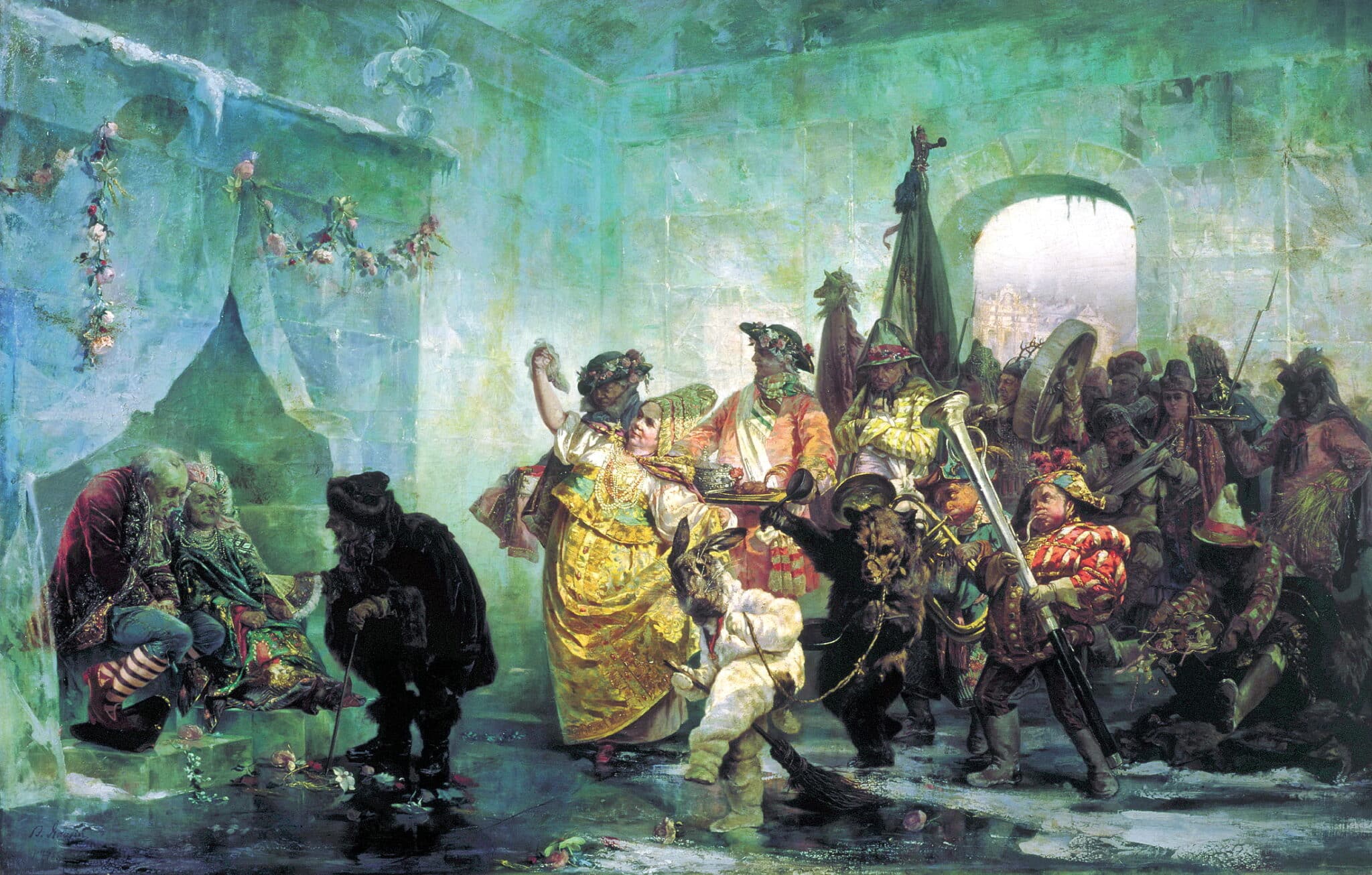
By Valery Jacobi – [1], Public Domain, LINK
Ice Palaces and Structures (18th Century – Present)
The first well-documented ice palace was commissioned by Empress Anna Ivanovna in St. Petersburg, Russia, during the cold winter of 1739–1740. It was built using huge ice blocks joined by frozen water, featuring ice furniture, trees, birds, an elephant statue, and even artillery. This palace was famously the setting for a mock wedding of two jesters. The city of St. Petersburg has recreated the ice palace every winter since 2005.
In North America, Montreal built an ice palace in 1883. St. Paul, Minnesota, has hosted several ice palaces since 1886 as part of its Winter Carnival, some using tens of thousands of ice blocks. The 1986 palace was the world’s highest structure made of ice, reaching 129 feet 9 inches. The city last built one in 2018.
Saranac Lake, New York, began its annual tradition of building an ice palace for its winter carnival in 1897 to raise the spirits of tuberculosis patients.
Quebec City’s Winter Carnival has featured ice palaces or castles annually since 1954.
The first Ice Hotel was erected in Jukkasjärvi, Sweden, and is rebuilt each January since 1991. This concept originated in 1989 when Yngve Bergqvist, the founder, opened Arctic Hall (an ice and snow art gallery), and guests unexpectedly stayed overnight. The Ice hotel melts back into the Torne River each spring, symbolizing an eternal cycle.
Technological Advancements and Artistry (Mid-19th Century – Present)
The harvesting of natural ice increased until the mid-1800s when ice manufacturing began. Jacob Perkins obtained a British patent for the first ice-making machine using ether in 1834, followed by Ferdinand Carre’s ammonia-based machine in 1859. By 1920, 750,000 blocks of ice were made daily in the United States alone.
In 1892, Chef Auguste Escoffier famously used an ice sculpture of a swan to display a new dessert, Peach Melba, at a dinner party in London, highlighting ice’s decorative use in cuisine.
The Sapporo Snow Festival in Japan began in 1950, growing to attract about two million people annually to see hundreds of snow and ice sculptures.
In 1964, Virgil Clinebell invented a machine producing clear ice blocks, leading to modern machines that produce crystal clear 300 lb blocks favored by carvers.
Modern ice sculptors use various tools, including chainsaws, chisels, and specialized picks. Power tools allow some sculptures to be completed in as little as ten minutes.
Since 1989, Fairbanks, Alaska, has hosted the annual World Ice Art Championships, drawing over 100 sculptors from around the world to sculpt large blocks of “pristine natural ice” or “Arctic Diamonds”.
The late 1980s saw a tool revolution in ice carving, with Mark Daukas popularizing the die grinder and angle grinder, and Steve Brice inventing numerous tools like ice carving bits and the nailboard.
Modern ice sculpting has evolved with technology, including the use of computer-aided design (CAD) software to plan intricate designs before sculpting. CNC machines and molding systems are now commonly used.

By Xtinac75 – Own work, CC BY-SA 4.0, LINK
Artists like Néle Azevedo began using melting ice figures in public installations like “Minimum Monument” (first exhibited in São Paulo in 2005) to critique public monuments and, more recently, to reflect on the climate crisis.
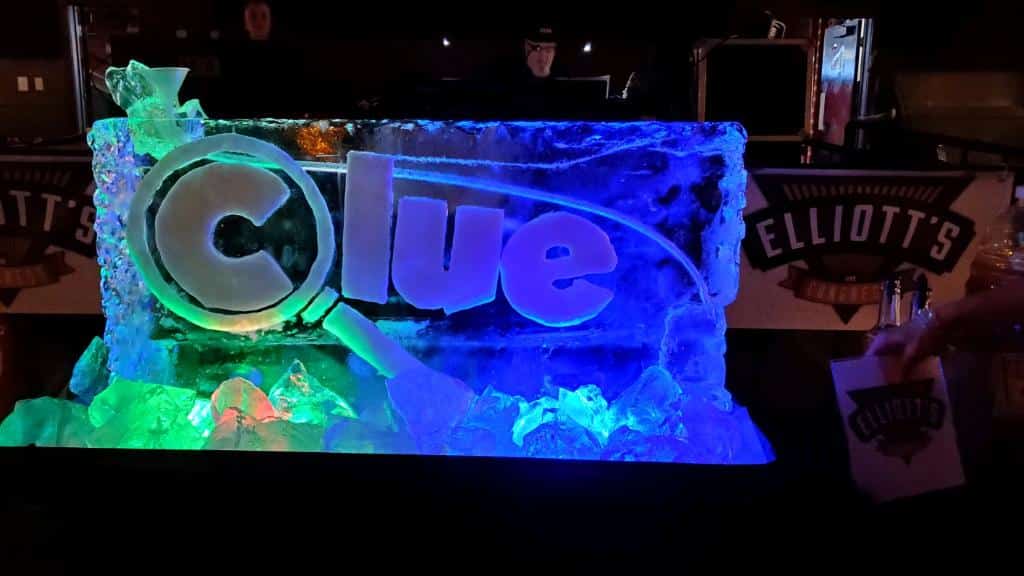
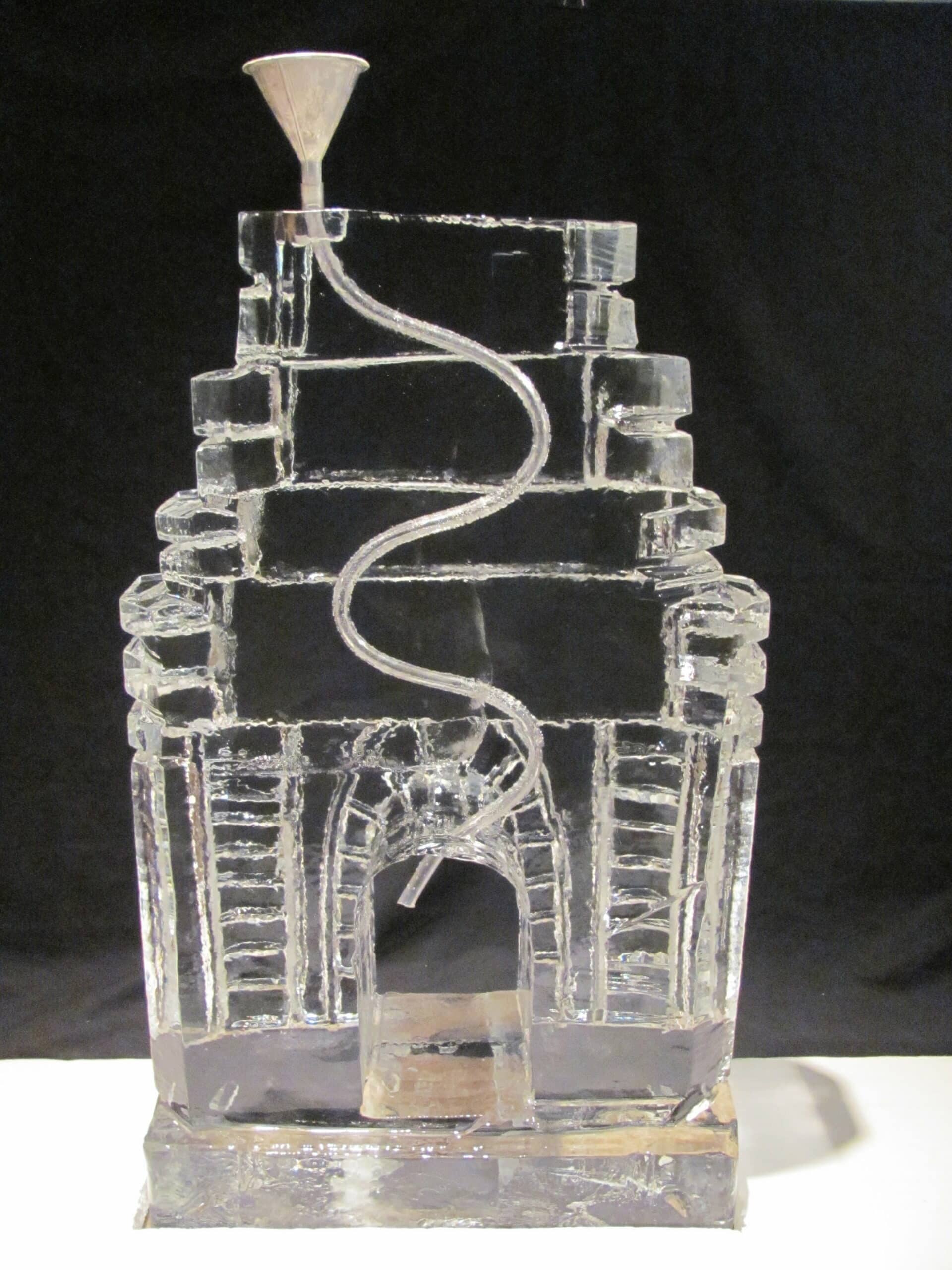
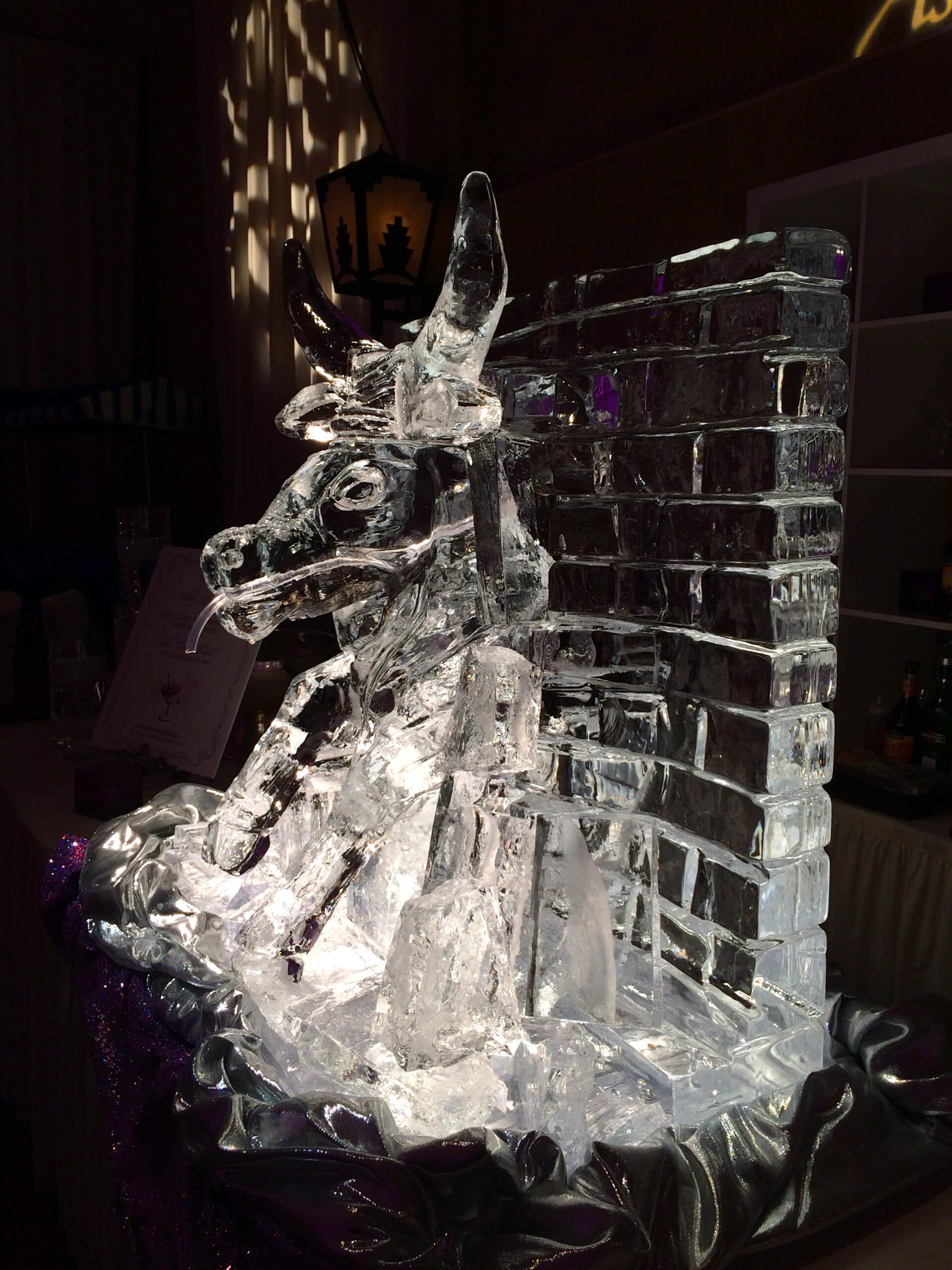
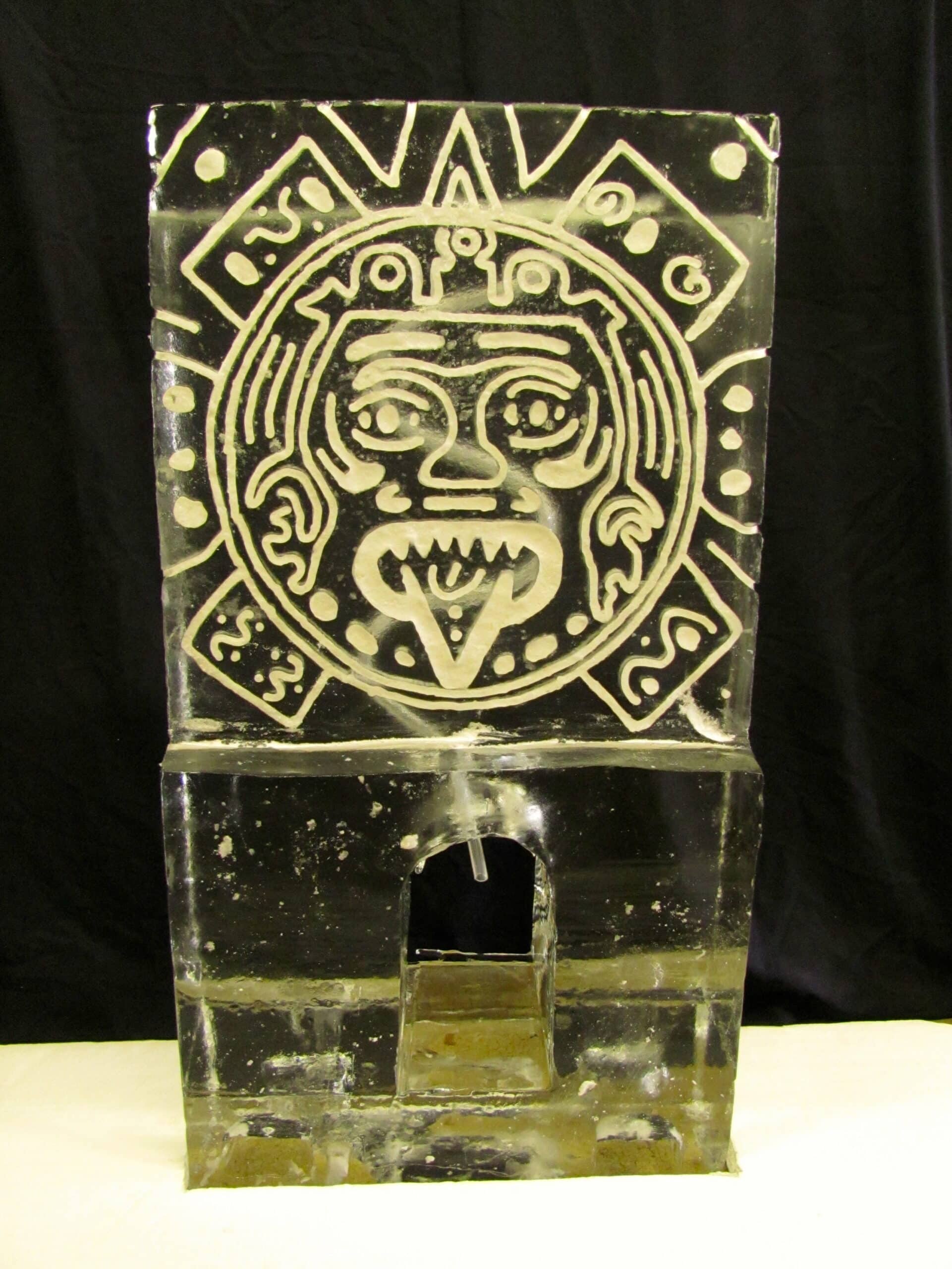
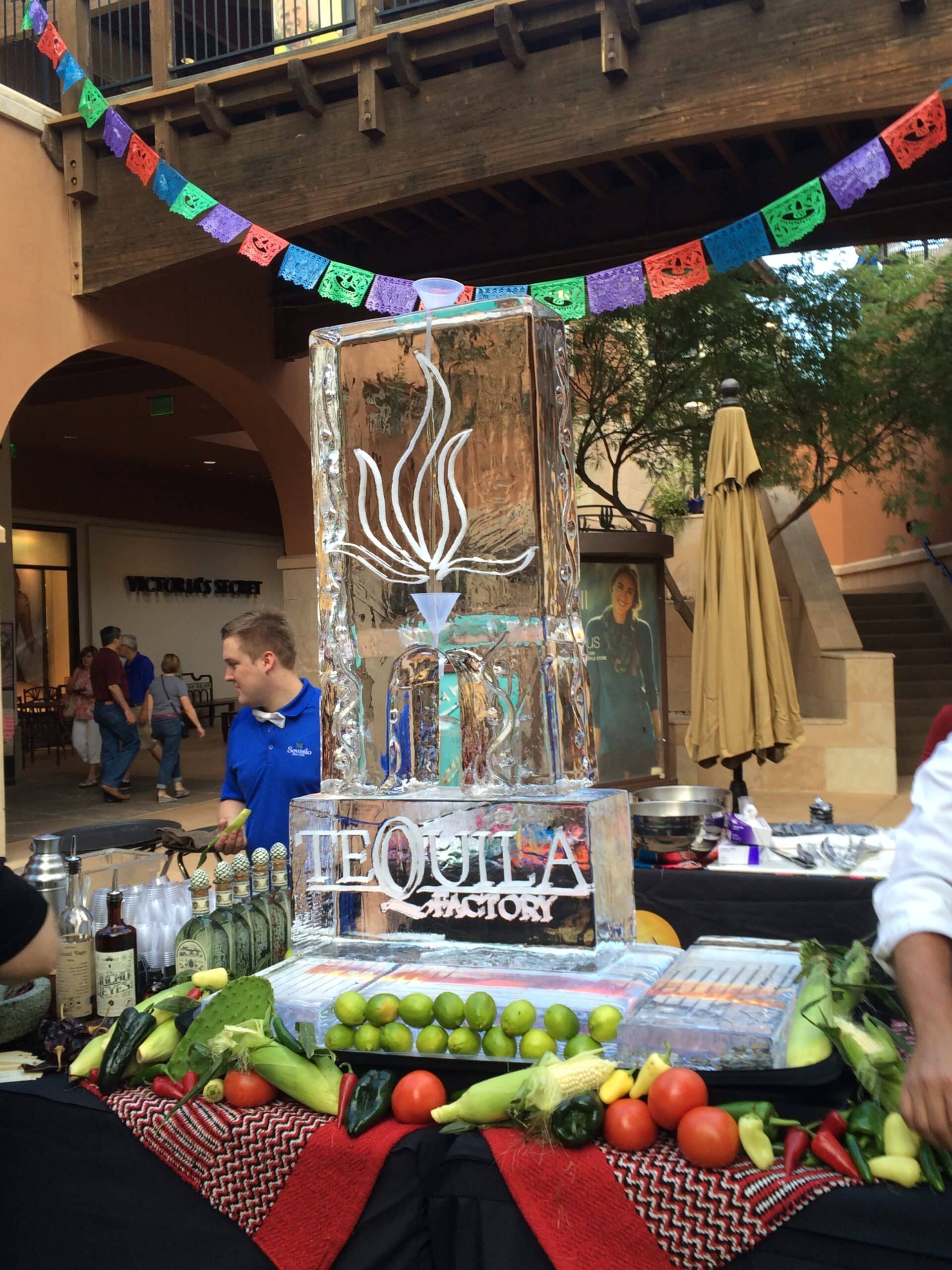
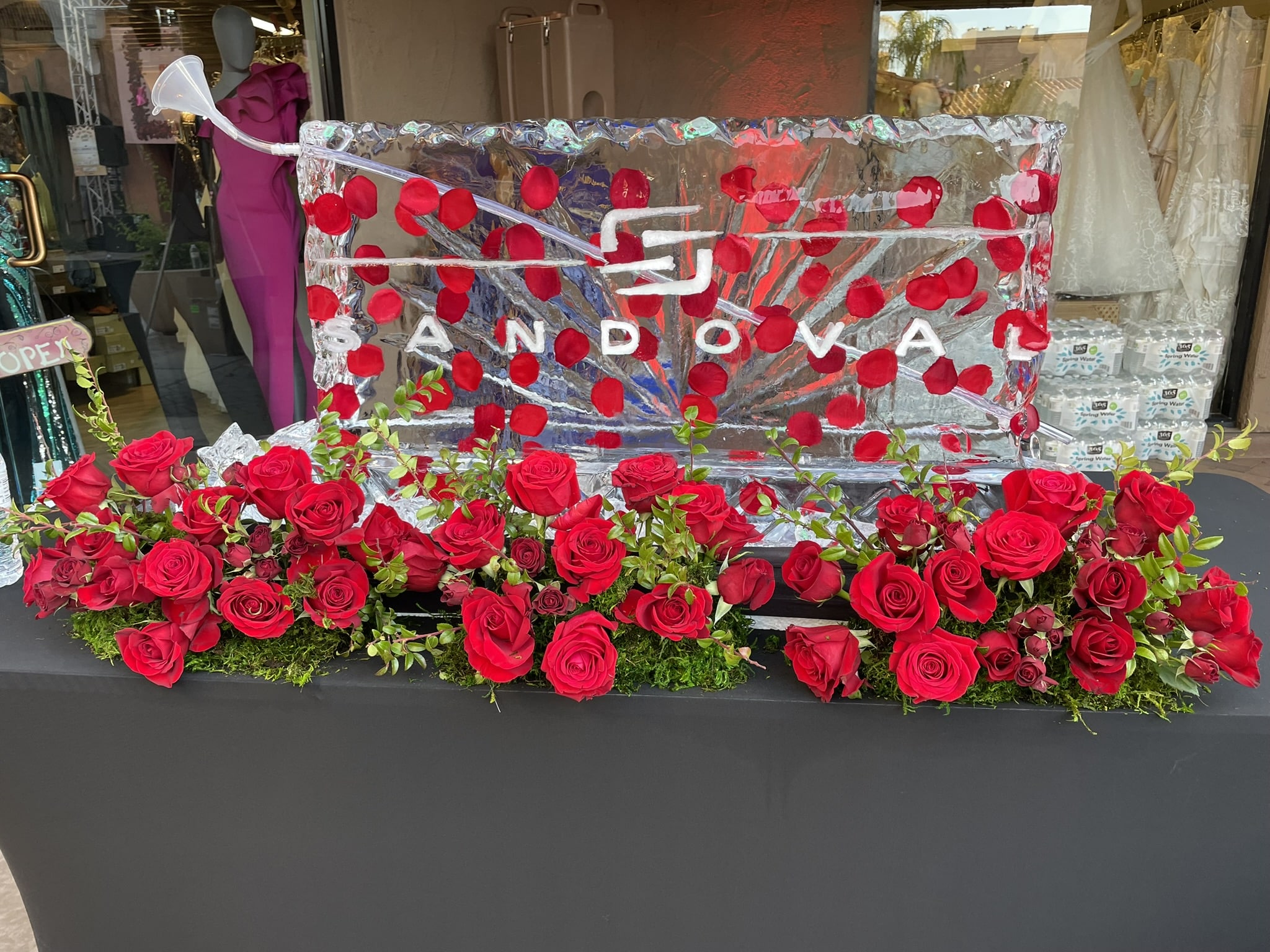
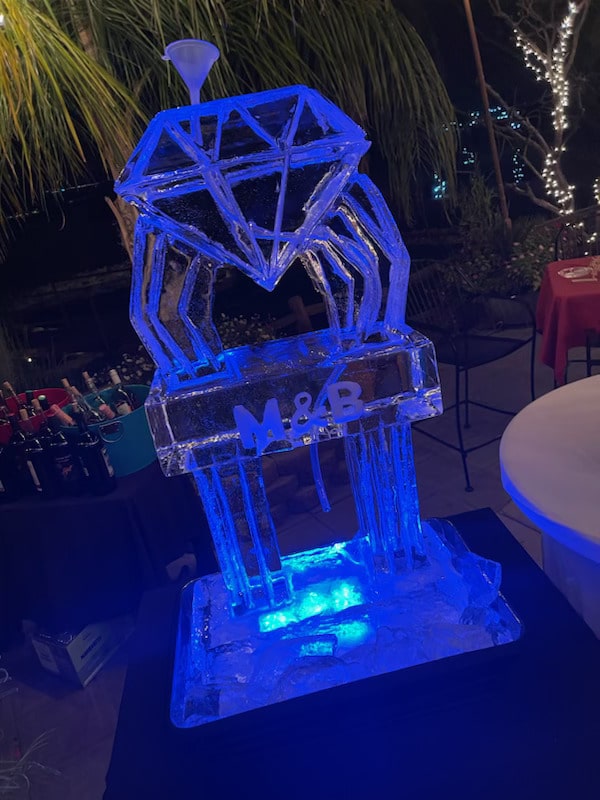
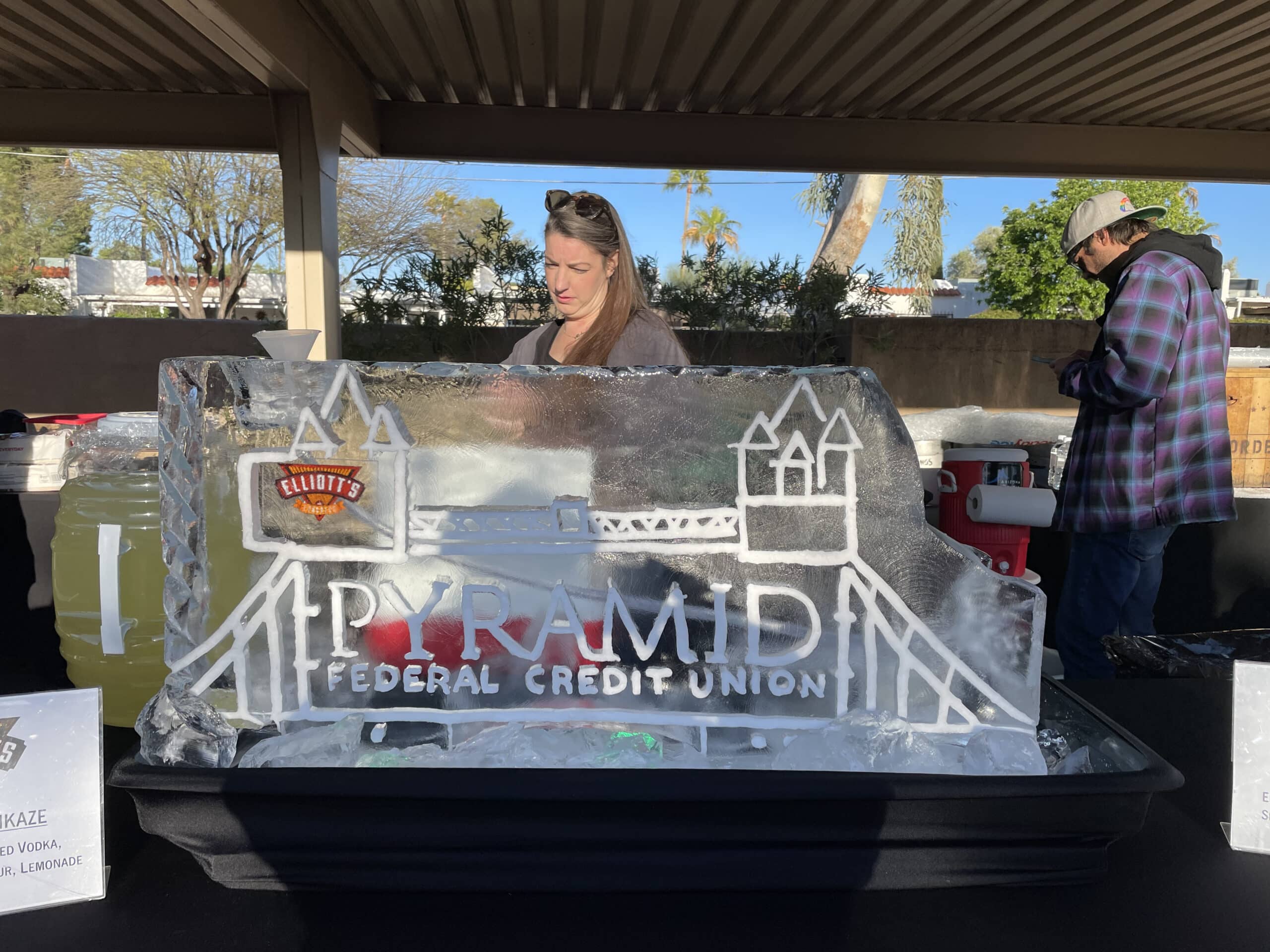
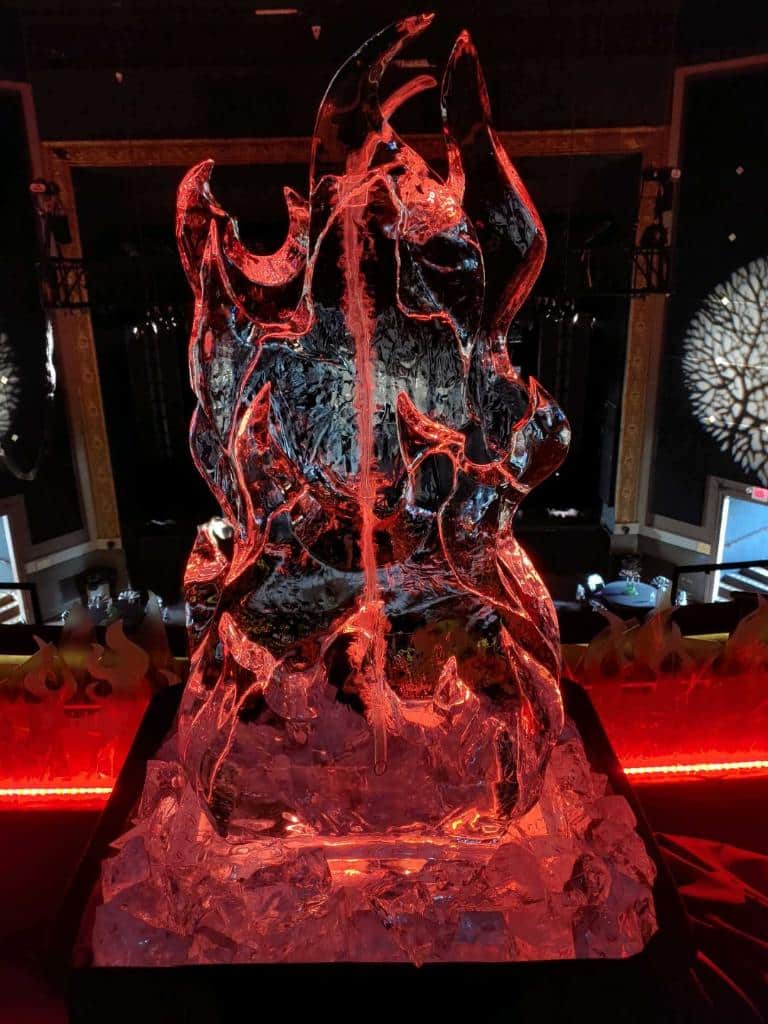
The ice luge is a creative way to enjoy ice. There is a carved channel in the ice block into which you pour shots. The shots chill as they flow down, ready for sipping at the bottom. Perfect for keeping your party cool and your drinks colder! Some ice luges also have a tube frozen inside the ice. These are known as tube luges. The biggest benefit of a tube luge is that it extends the life of the luge. Since the tube buffers the ice from the drink, the ice doesn’t erode as quickly with each pour. Great if you are serving a large number of drinks or individual drinks that are larger than 2 oz shots.
Here are some of the more intricate luges we have made for our customers:
Share the post:
May 21, 2025 Arizona Ice Art All About You Customer Spotlight Ryne’s Love Affair with Artisanal Ice By Sam Agrawal, Managing Director/Owner, Arizona Ice Art